
 Bathroom
 Bedroom
 Dining Room
 Kitchen
 Living Room
 Nursery
 Office
The domestic landscape has shifted irrevocably. Working from home, once a luxury afforded to the few, has transmuted into a standard operating procedure for the many. Yet, architectural reality often lags behind this professional evolution; not every residence is blessed with a dedicated study or a spare library. For the majority, the challenge lies in carving out a productive, cognitive zone within the existing confines of a bedroom, a living room, or even a transitional hallway.
However, a diminutive footprint does not necessitate a compromised workflow. The philosophy of the small home office is not about shrinking a traditional office; it is about reimagining space through “Smart Verticality” and “Visual Lightness.” By employing clever spatial hacks and prioritizing intentional design over sprawling desks, even the most modest nook can be transformed into a powerhouse of productivity. We will explore 20 distinct designs categorized by layout strategy, from hidden “cloffices” to floating minimalism along with expert methodologies on cable management and illumination to ensure your workspace is as functional as it is stylish.
Design Principles for Small Spaces
Before selecting furniture, one must understand the optical illusions and structural strategies that make a small office feel expansive rather than claustrophobic.
- The “Floating” Rule: In tight quarters, floor space is premium real estate. Furniture that sits directly on the floor with heavy bases creates visual blockage, making the room feel smaller. The solution is the “floating” or cantilevered approach. Wall-mounted desks and shelving units keep the floor visible from wall to wall. This continuity of flooring tricks the eye into perceiving the room as larger and less cluttered.
- Visual Weight & Permeability: Not all objects of the same size carry the same “visual weight.” A chunky oak desk feels heavier than a sleek glass or acrylic table of identical dimensions. To maintain an airy atmosphere, prioritize materials that offer visual permeability: slim metal frames, ghost chairs, or light-reflecting surfaces that allow light to travel through the furniture rather than being absorbed by it.
- The “Zoning” Technique: Without physical walls, you must rely on psychological demarcation to separate “Work Mode” from “Home Mode.” This can be achieved through color blocking painting the arch or corner where the desk sits a different hue or using a small, textured rug to delineate the boundary of the office. This signals to the brain that when you cross this threshold, professional focus is required.
Top 20 Clever Ideas
1. Bohemian Corner Workspace
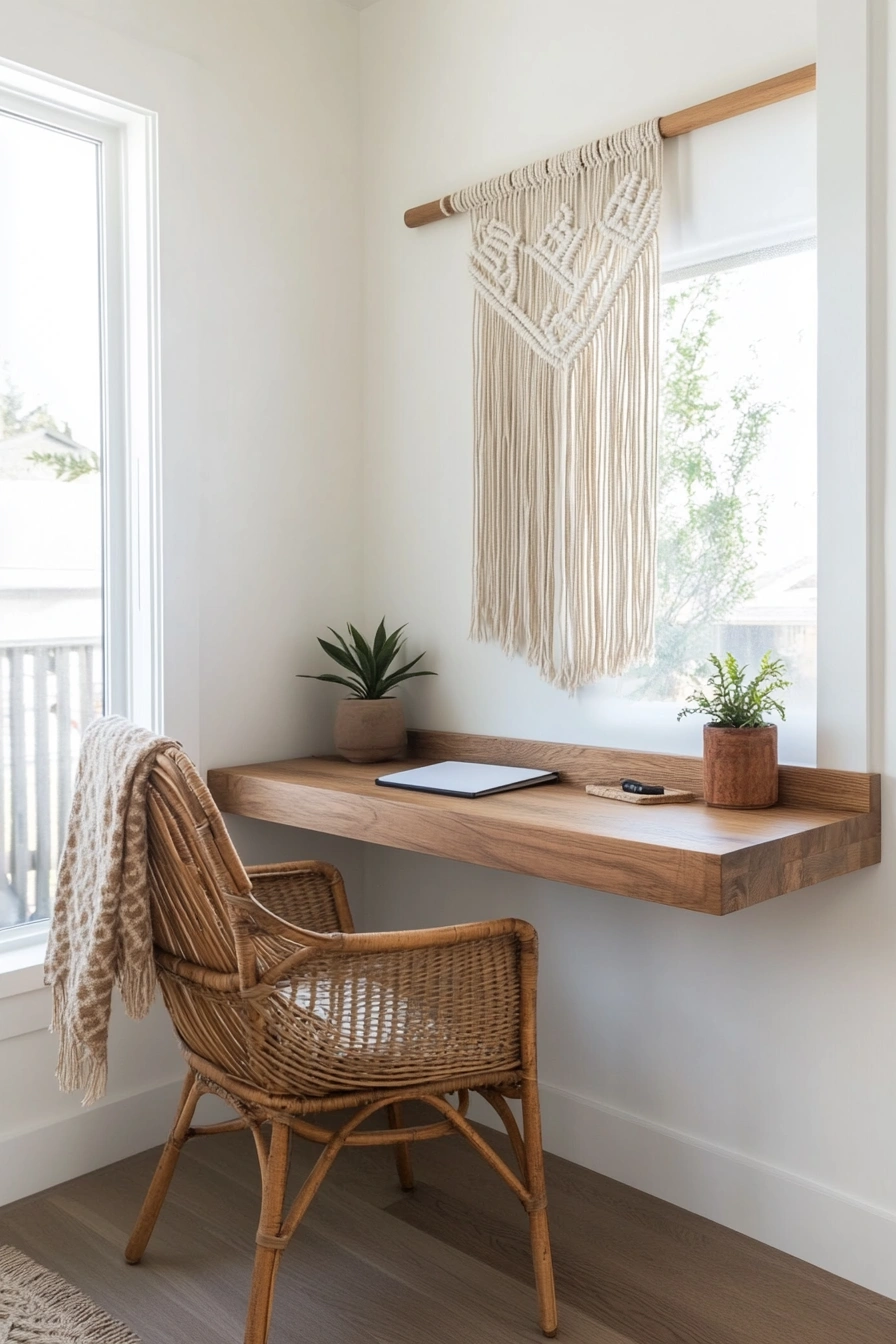
I just love how this cozy boho workspace is perfectly tucked into a bedroom corner, turning a dead zone into a sanctuary. It features a charming rattan chair, which adds organic texture, paired with a simple floating wooden desk that maintains the room’s flow. A beautiful macramé wall hanging acts as a soft acoustic buffer. The earthy color palette and the small potted plant add so much warmth, making the space feel both inviting and perfectly functional. You can get this relaxed look by focusing on natural materials, a neutral color scheme, and plenty of soft, beautiful textures.
2. Compact Monochrome Workspace
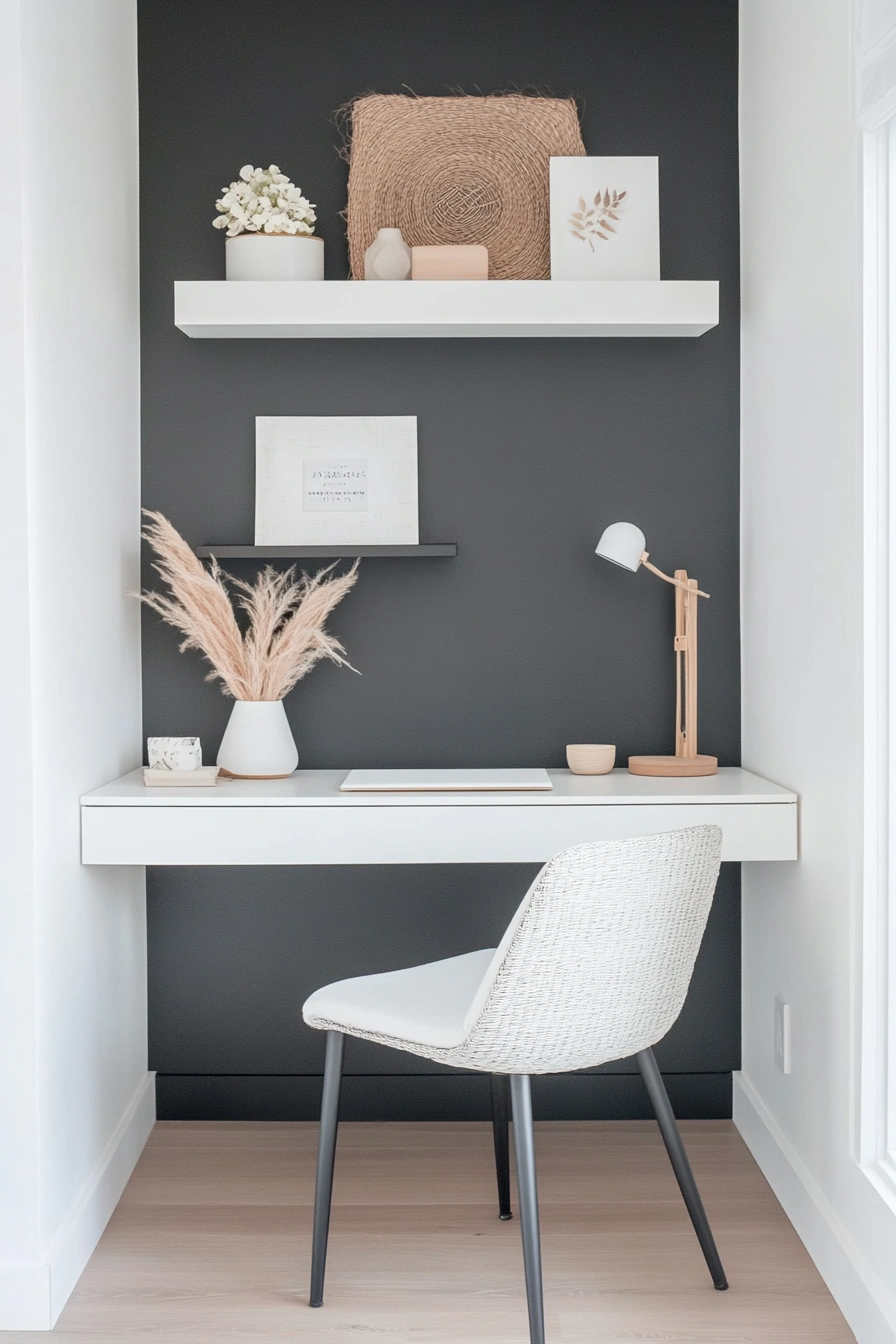
This sleek black-and-white small office features a crisp white desk set against a bold black accent wall, creating a stunning contrast known as chiaroscuro. This high-contrast approach creates immediate depth. A slimline shelf above the desk holds minimalist decor, which helps to keep the space feeling clean and clutter-free. You can capture this modern aesthetic with clean lines, high-contrast colors, and simple yet stylish accessories that prioritize form and function equally.
3. Corner Shelf Desk for Small Spaces
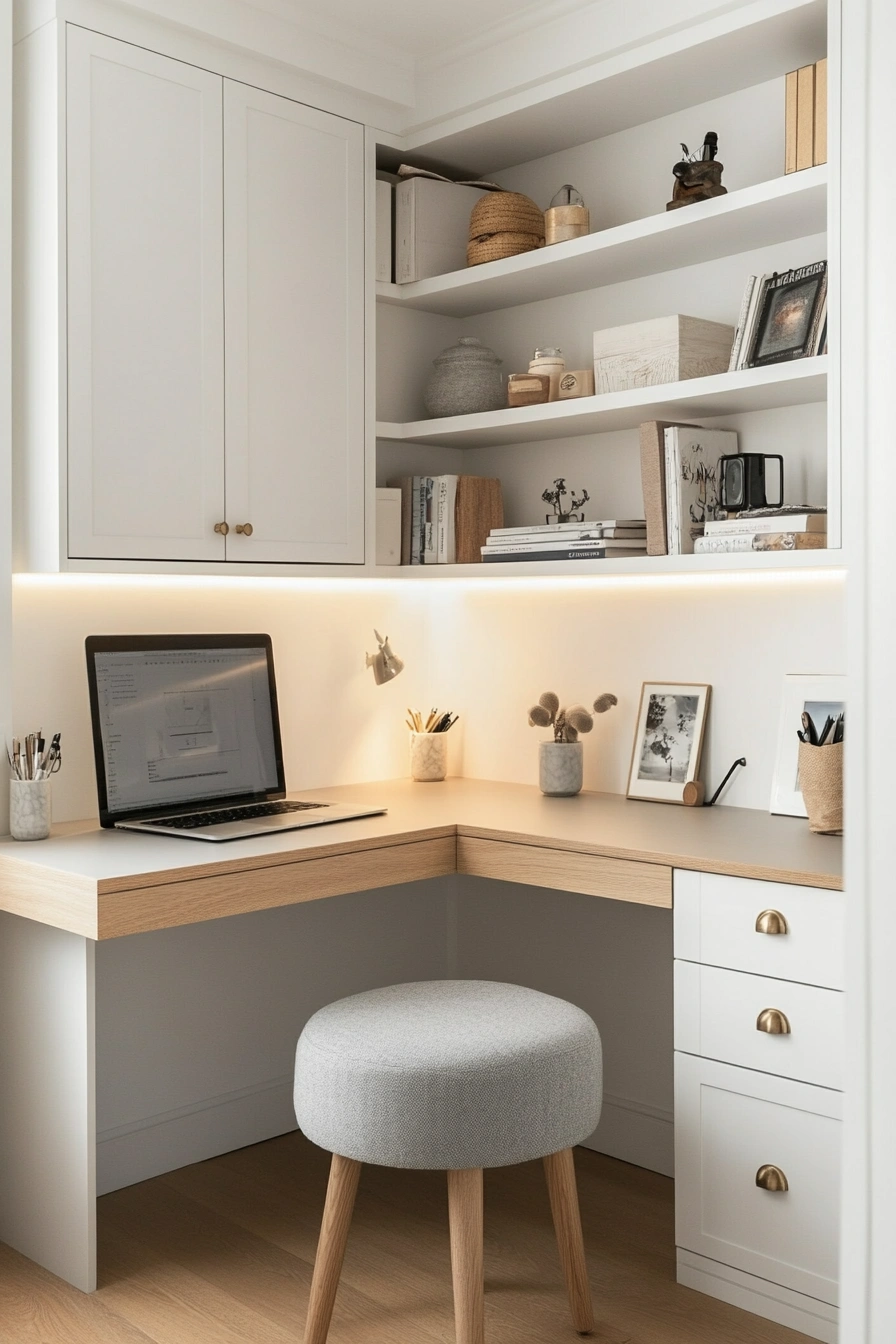
This is a smartly designed, space-saving office that features a wraparound corner shelf that cleverly doubles as a desk, maximizing the ergonomics of the room. The white cabinetry provides plenty of hidden storage, essential for maintaining a tidy mind, while a soft gray upholstered stool adds a touch of comfort without the bulk of a full chair. The soft lighting enhances the cozy ambiance. You can recreate this efficient setup with built-in storage and neutral tones for a seamless look.
4. Dark and Moody Small Study
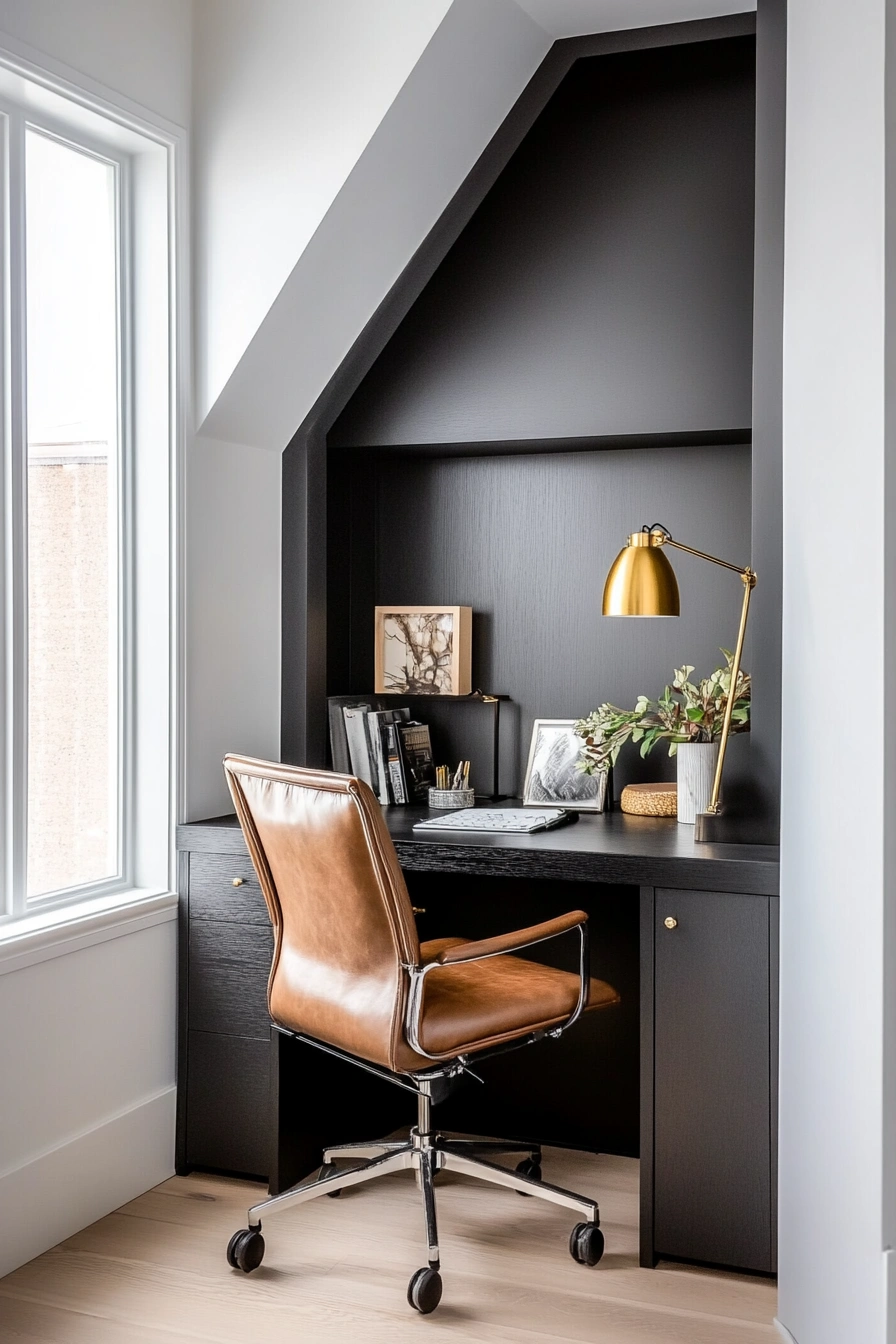
A deep charcoal-painted home office is nestled in a small nook, proving that small spaces can handle dark colors if done correctly. It features a black wooden desk, a warm brass desk lamp that acts as jewelry for the room, and a sleek leather office chair. The rich, moody tones create a sophisticated and focused work retreat that feels enveloping. You can achieve this look with dramatic paint colors, elegant metallic accents, and soft, ambient lighting.
5. Eclectic Office Under a Slanted Ceiling
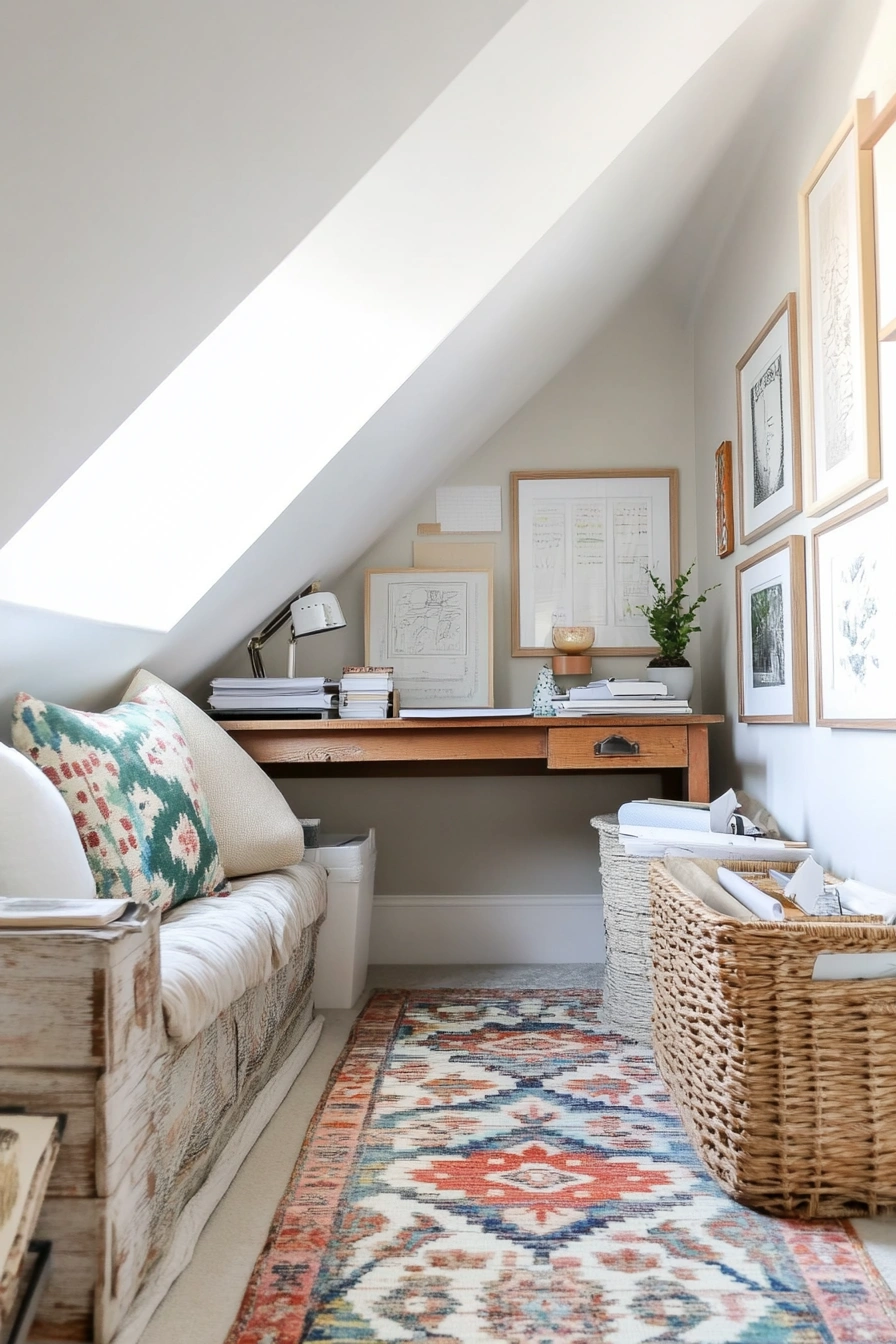
A charming attic workspace utilizes the idiosyncratic architecture of a slanted ceiling, pairing it with a rustic wooden desk and a colorful patterned rug that adds a lot of personality. The collection of mismatched framed art pieces creates a curated and artistic feel, turning a difficult architectural feature into a gallery. You can bring this eclectic design to life with layered textures, unique vintage decor, and warm, inviting colors.
6. Glass Desk in a Small Corner
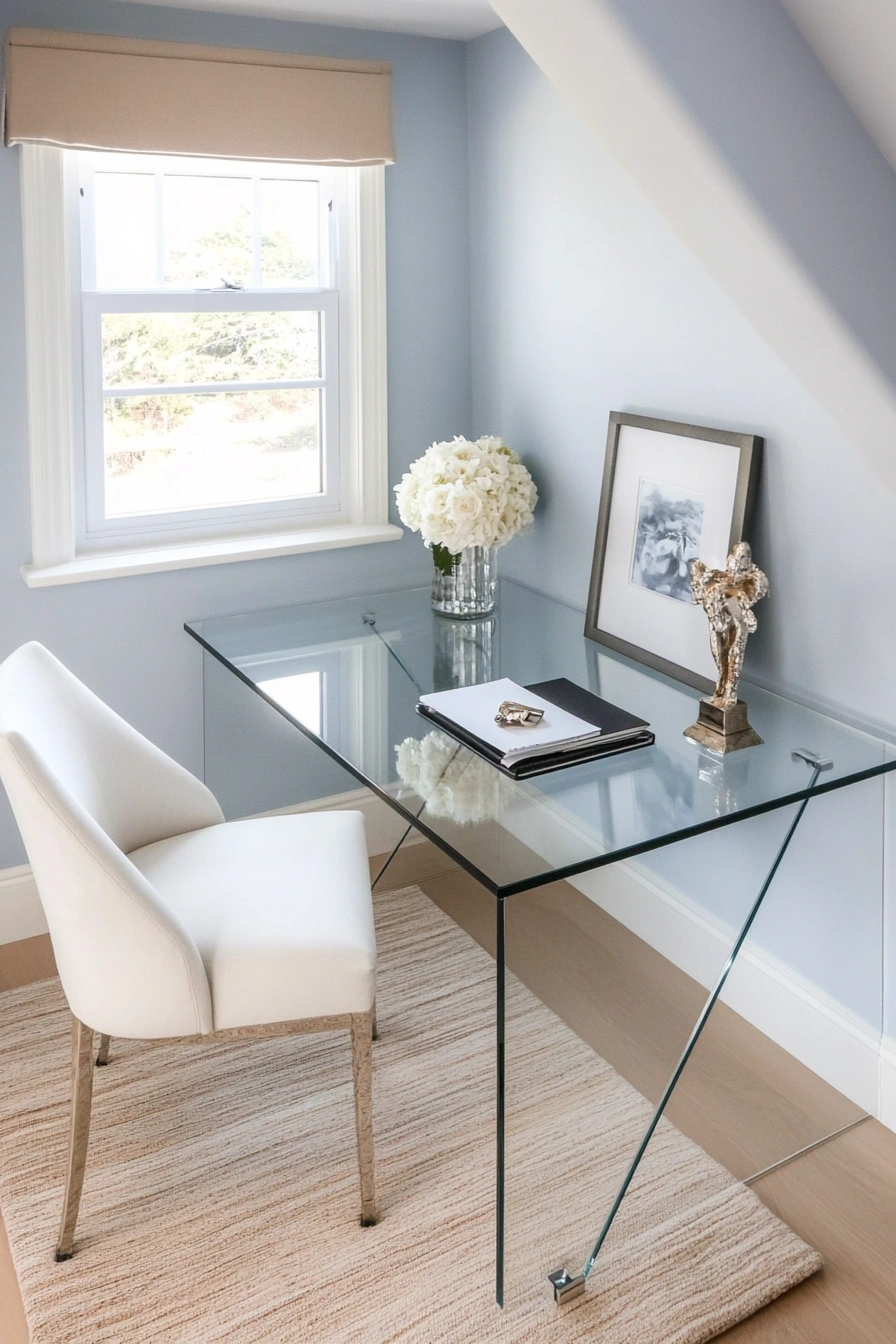
This contemporary small office features a sleek glass desk, which helps the space feel open and airy by offering zero visual resistance. A minimalist white chair pairs beautifully with the soft blue walls, creating a calming and distraction-free work environment suitable for high-stress jobs. You can capture this modern elegance with minimal furniture, cool tones, and other reflective surfaces to bounce light around the room.
7. Hidden Closet Workspace
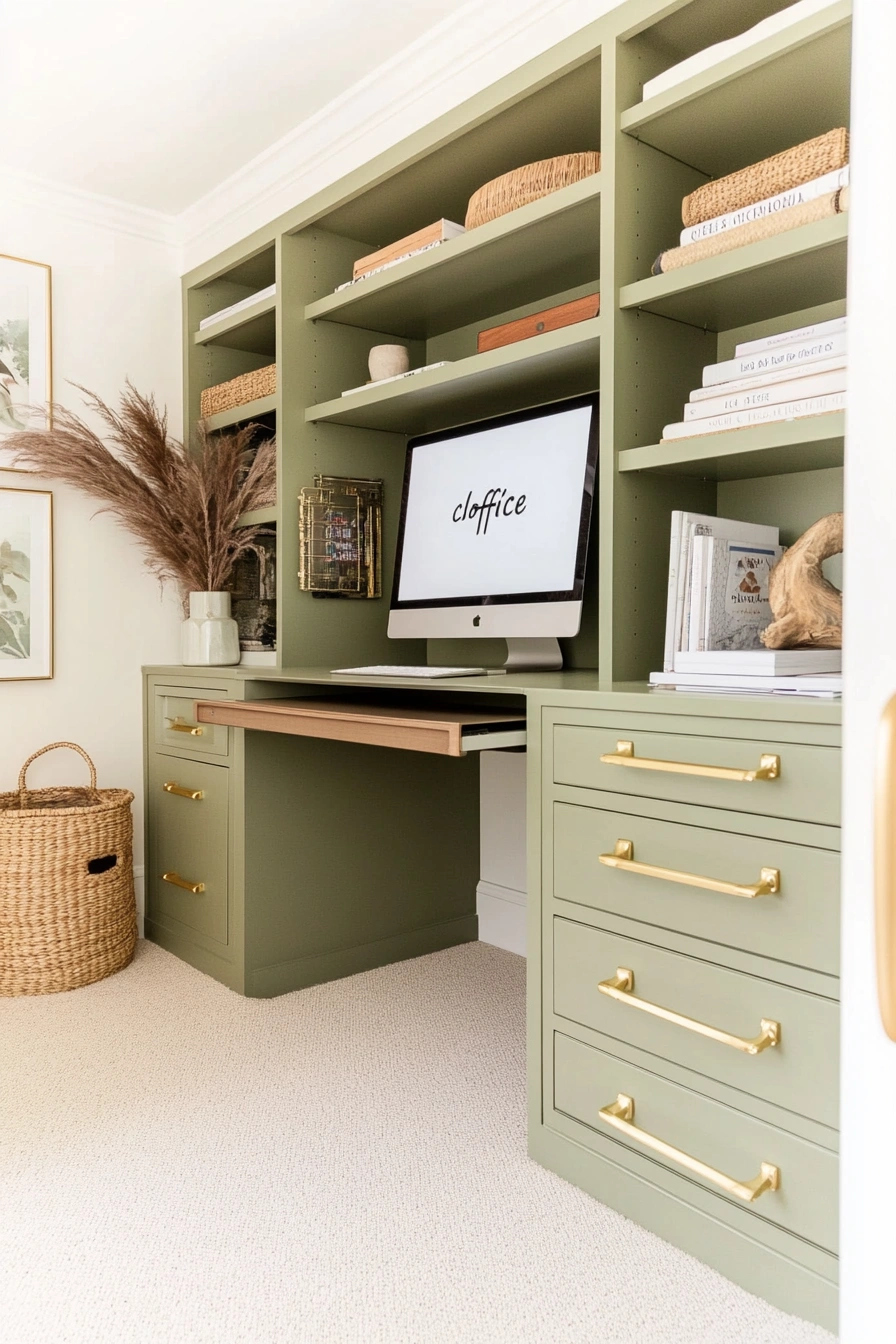
A stylish “cloffice” (a closet turned into an office!) utilizes vertical space with built-in shelves painted in a soft sage green, a compact desk, and a hidden pull-out keyboard tray. The elegant gold handles add a refined touch, while the enclosed space offers a quiet and focused work zone that can be concealed at the end of the day. You can achieve this look with smart storage solutions and soothing muted tones.
8. Mid-Century Modern Nook
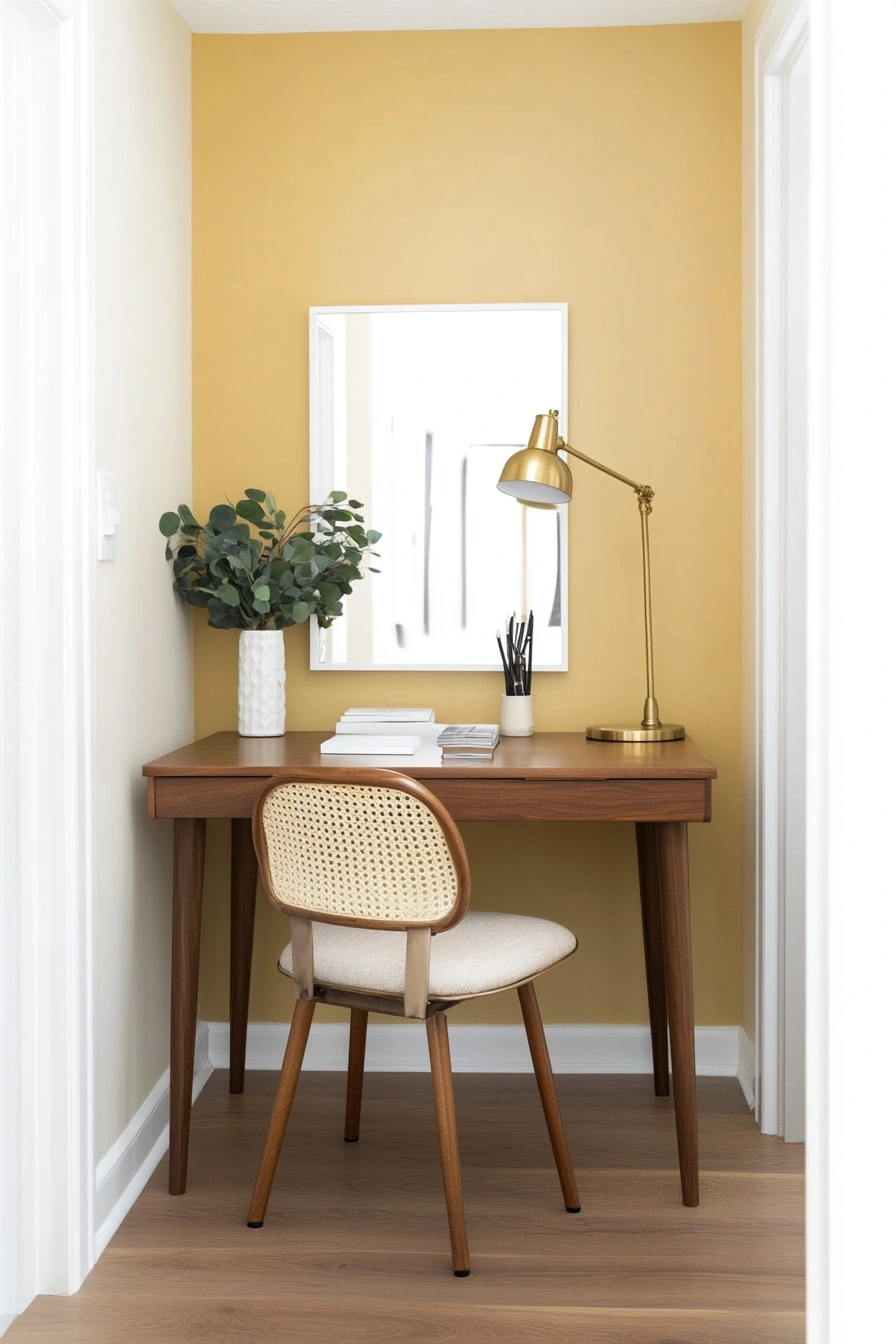
A stylish home office is tucked into a hallway nook, featuring a walnut-finish desk with classic tapered legs, characteristic of the mid-mod aesthetic. Against mustard yellow walls, the vintage-inspired chair pops visually. A beautiful brass desk lamp adds extra charm and warmth. You can recreate this Mid-Century Modern vibe with a retro color palette, natural wood tones, and clean, simple lines.
9. Minimalist Floating Desk Nook
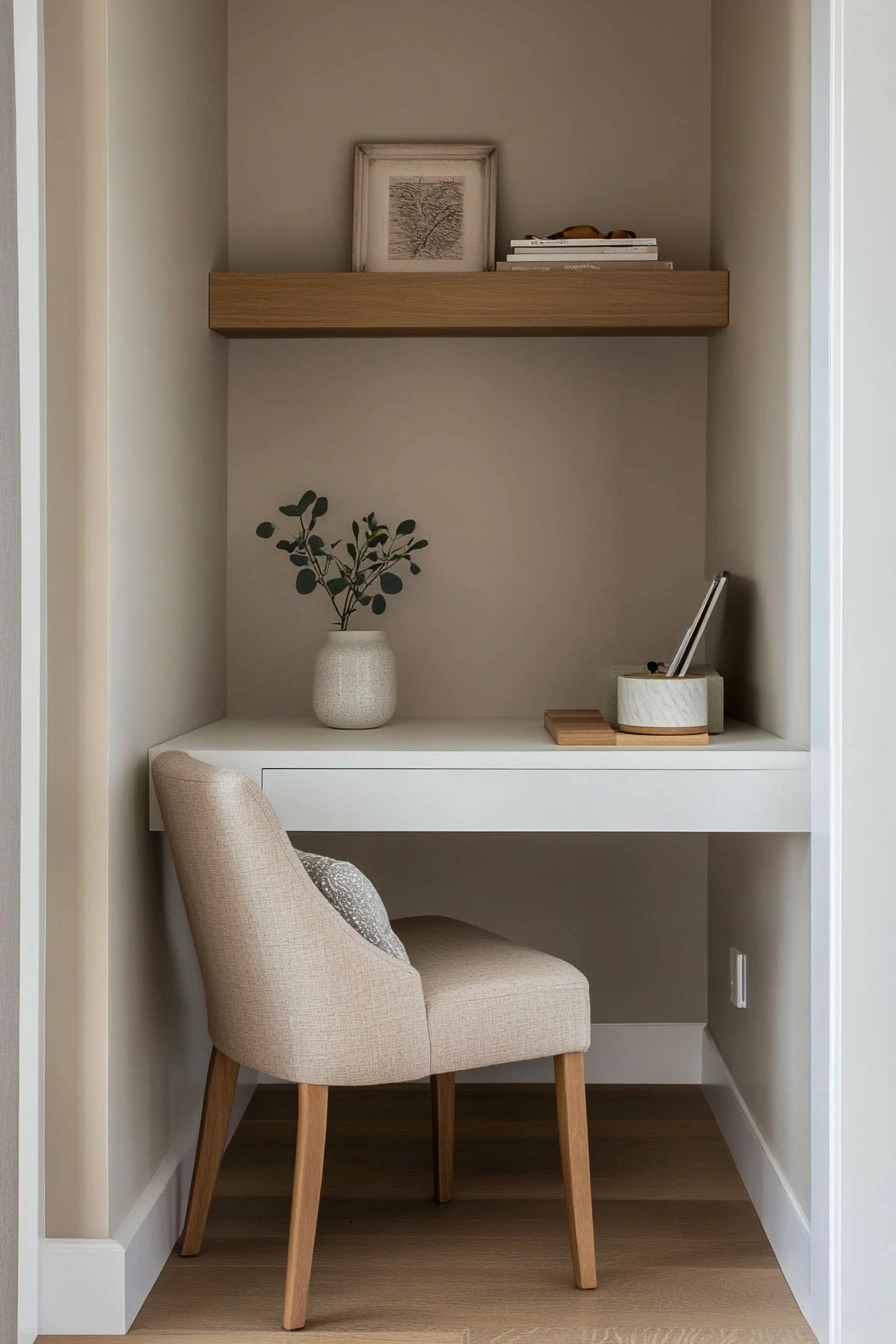
A Scandinavian-inspired workspace has been designed within a small alcove, featuring a white floating desk, a single wooden shelf, and a compact neutral-toned chair. The absence of legs on the desk makes the alcove feel wider. The soft beige walls keep the space feeling light and airy. You can achieve this look with neutral hues, sleek surfaces, and practical yet elegant furnishings.
10. Minimalist White Workspace
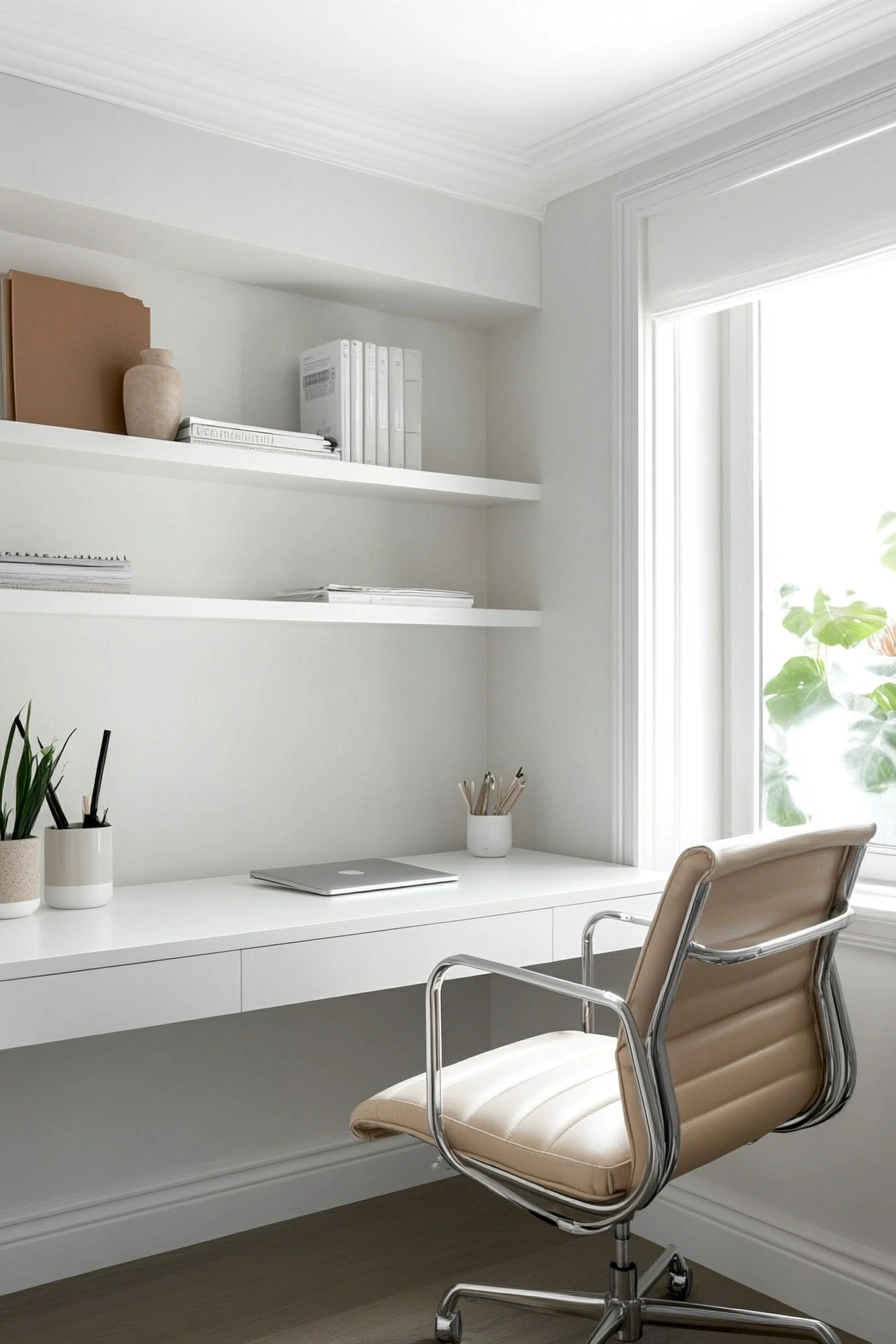
A crisp, all-white small office with a simple floating desk, slimline shelving, and a single beige accent chair. The monochrome palette blurs the edges of the room, while natural light from a nearby window enhances the clean, open look of the space. You can create this bright and refreshing workspace with minimal decor, a few high-contrast accents, and streamlined organization.
11. Monochrome Black and Wood Office
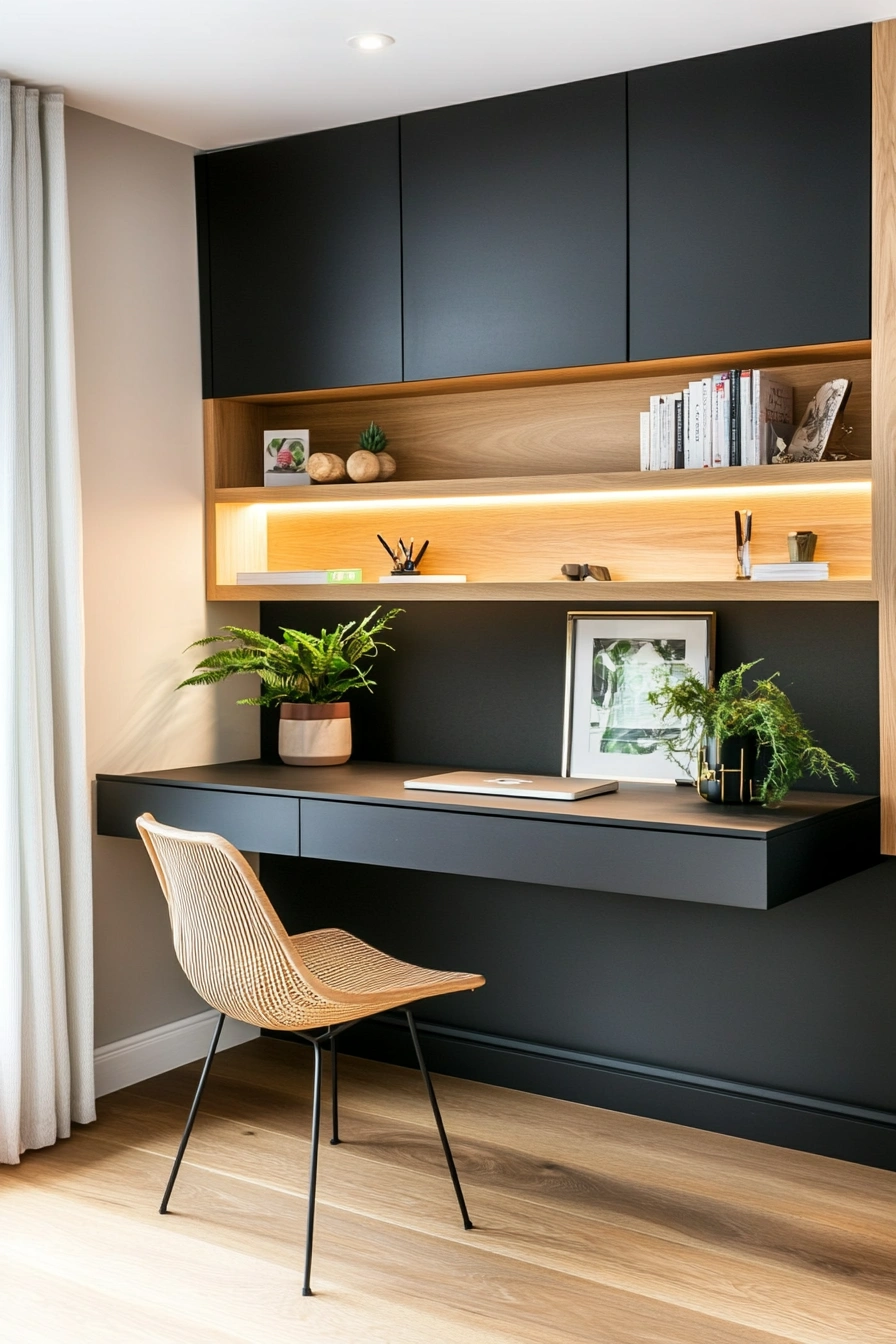
A stylish and compact workspace featuring a sleek black floating desk, warm wooden accents, and soft LED lighting under the shelves. The juxtaposition of matte black against warm timber creates a masculine, sophisticated vibe. A single modern chair keeps the space feeling minimal yet perfectly functional. You can achieve this sophisticated look with dark, matte finishes, warm wood textures, and ambient lighting.
12. Narrow Built-In Desk Wall
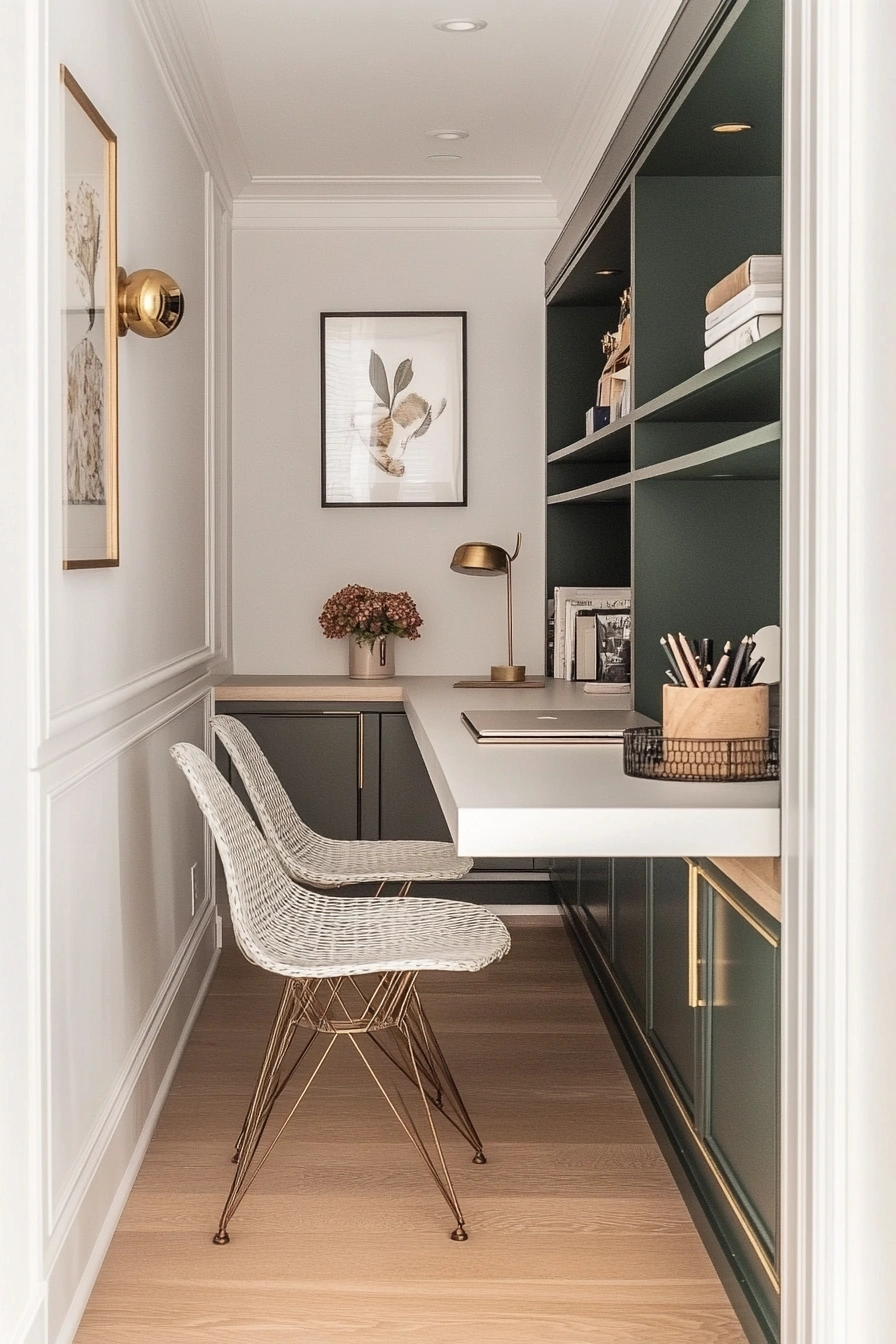
This is a smart built-in workspace along a narrow wall, featuring a long white desk, deep green shelves, and elegant gold accents. By utilizing the length of the wall rather than depth, it preserves the walkway. A simple chair tucks neatly underneath, which maximizes the functionality in a very small footprint. You can capture this polished look with rich tones, efficient storage, and metallic details for a refined touch.
13. Soft Pink Feminine Home Office
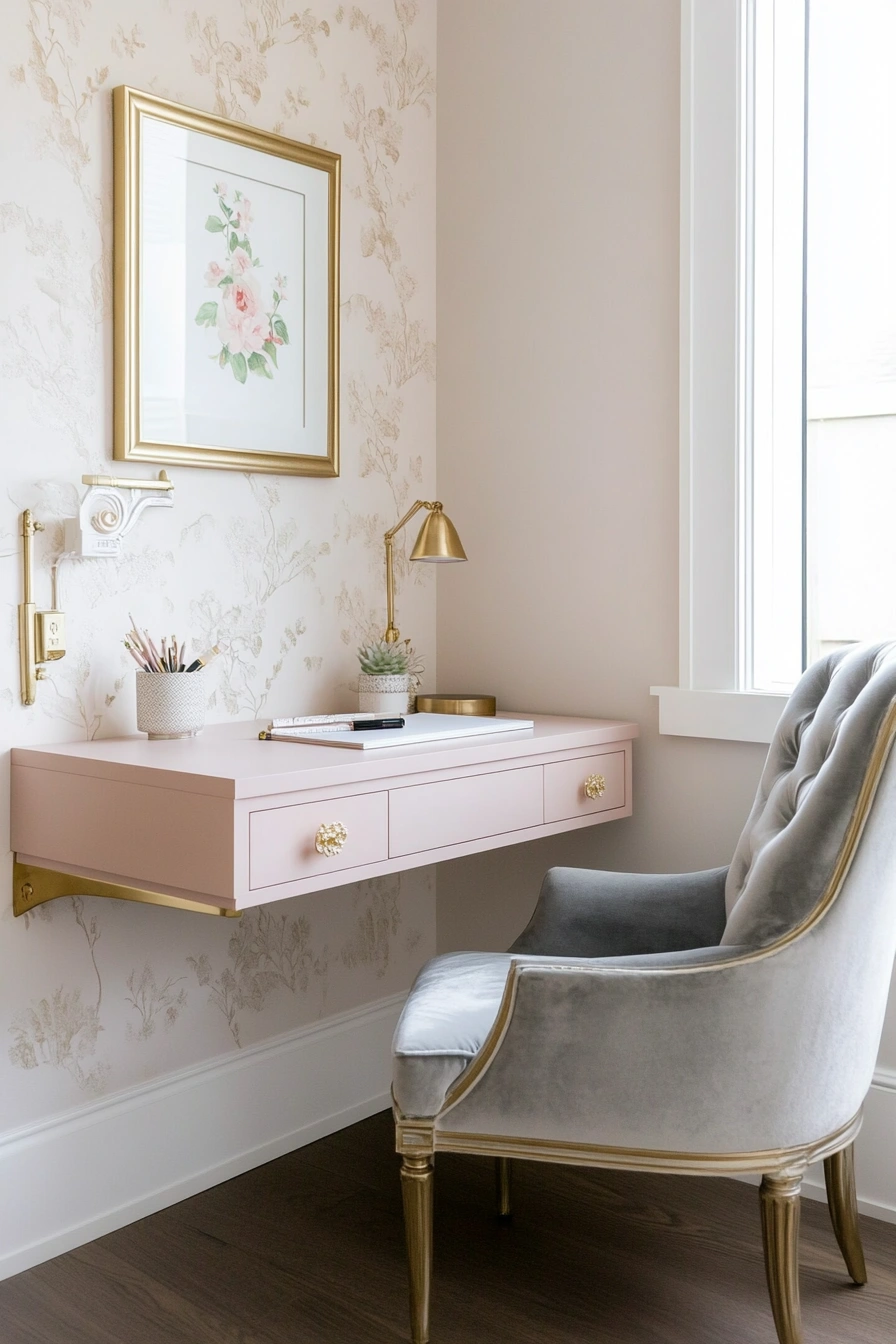
A delicate, pastel-toned office is tucked into a small corner, featuring a blush pink floating desk, beautiful gold accents, and a light gray velvet chair. The subtle floral wallpaper adds a romantic charm to the space, creating a soft landing spot for creativity. You can achieve this soft, feminine aesthetic with muted pastels, plush textures, and refined metallic finishes.
14. Tiny Coastal Office by the Window
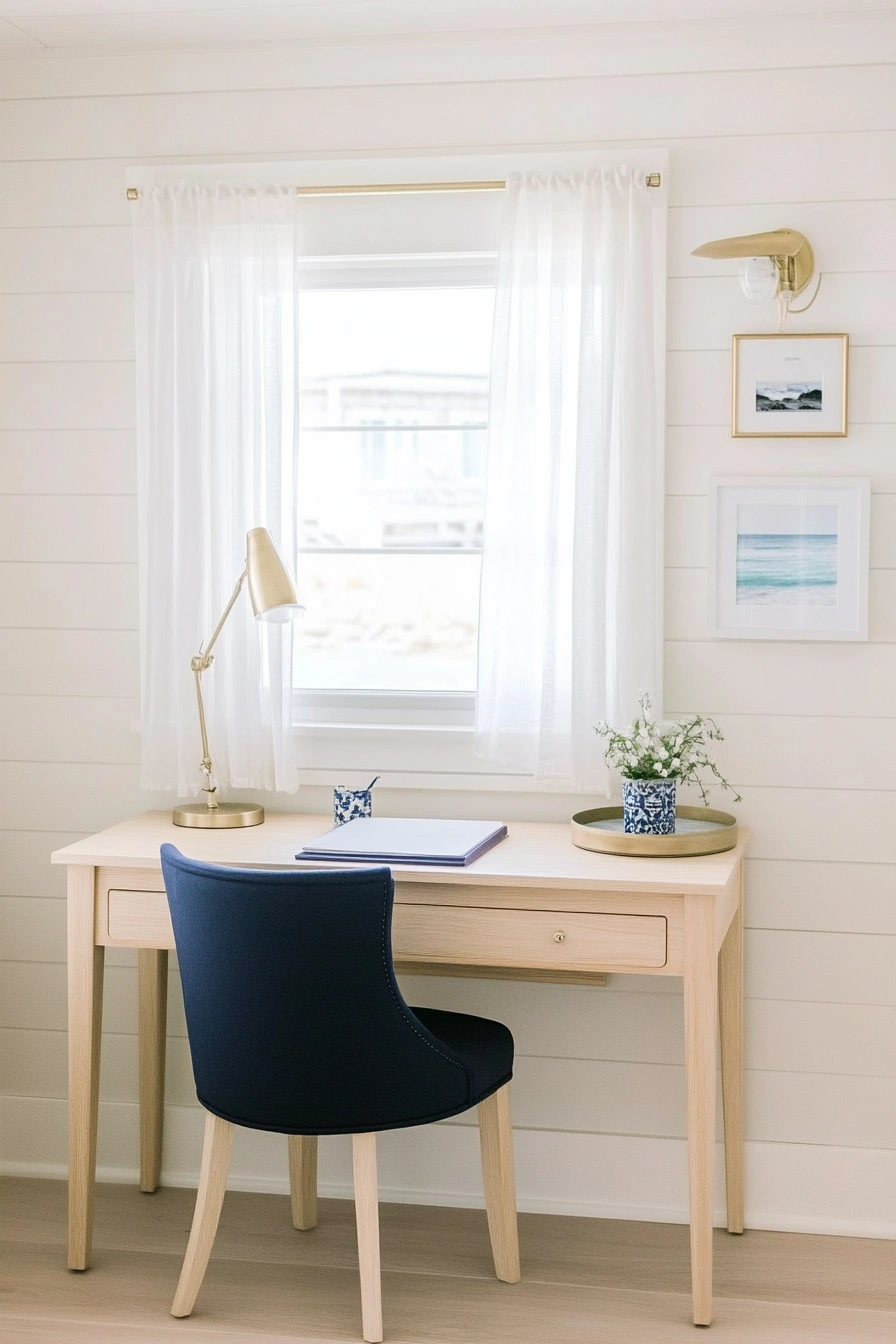
A light-filled, coastal-style workspace with a pale wood desk, a navy blue chair, and white-washed walls. A small window with a sheer curtain filters in the natural daylight, creating a breezy and serene ambiance that reduces eye strain. You can recreate this fresh coastal vibe with soft neutrals, oceanic blues, and light, airy textures.
15. Tiny Floating Desk on a Landing
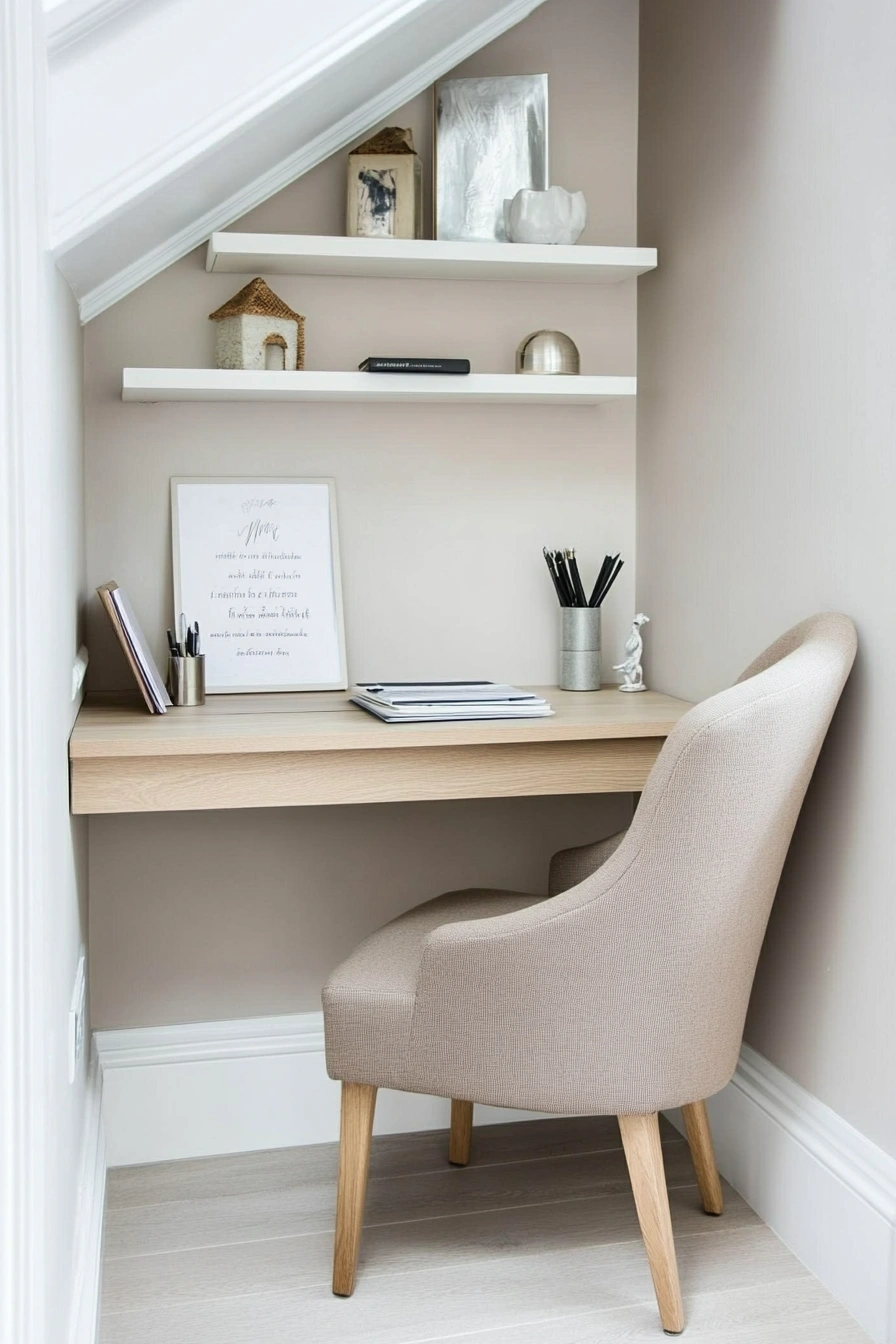
A minimalist home office has been set up on a stair landing, transforming a transitional space into a destination. It features a sleek wall-mounted desk, a single floating shelf above, and a compact upholstered chair in a soft taupe. The neutral tones keep the space feeling open and airy. You can achieve this seamless look with light woods, soft fabrics, and subtle decor.
16. Tiny Japandi-Inspired Home Office
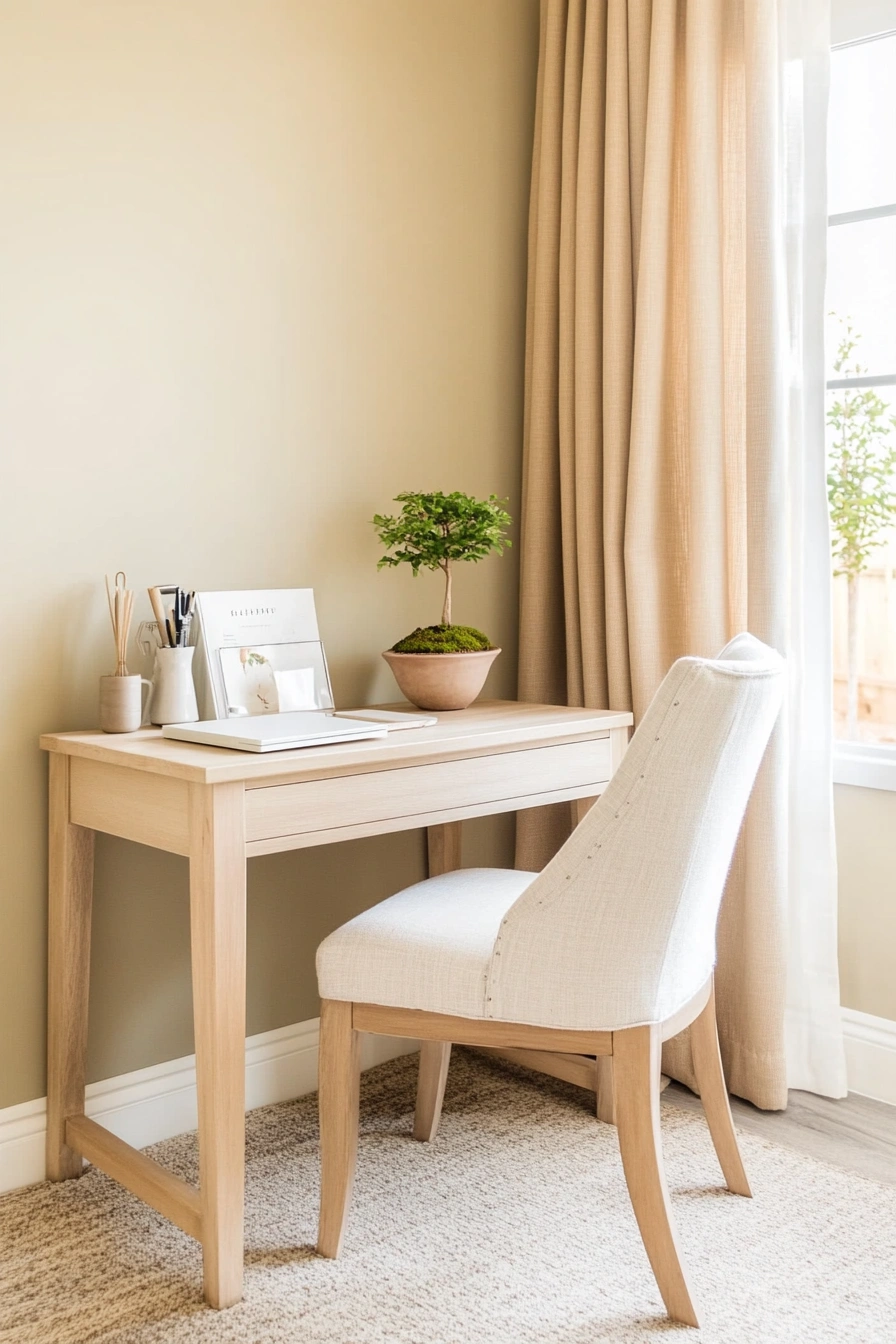
A calming Japandi-style workspace blends the rustic warmth of Scandinavian design with the sleek functionality of Japanese aesthetics. It features soft beige walls, a compact light wood desk, and a neutral linen chair. A small potted bonsai adds a perfect touch of balance and simplicity. You can capture this tranquil aesthetic with organic textures, warm neutrals, and minimalist design principles.
17. Tiny Scandinavian Work Nook
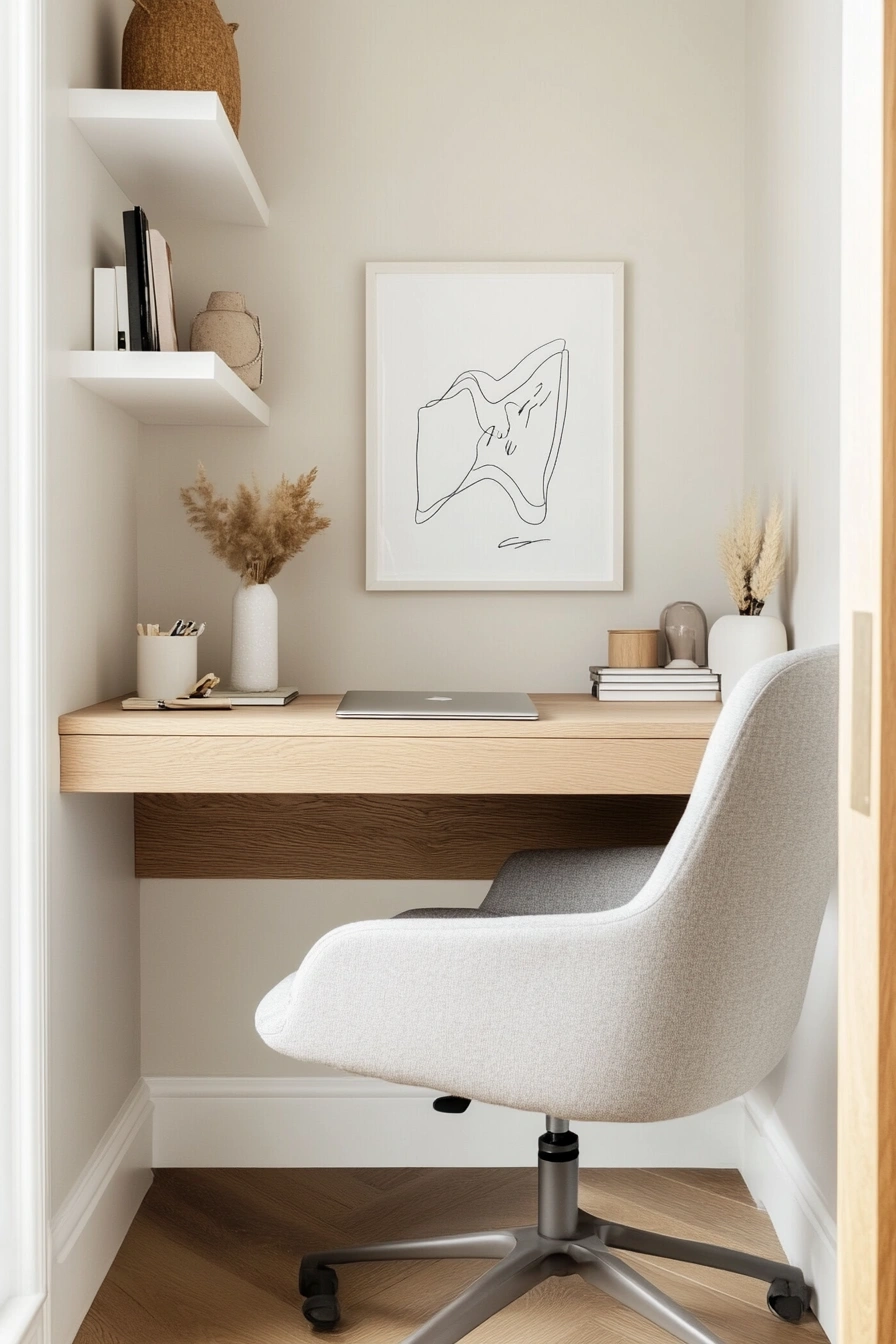
A compact, Scandinavian-inspired workspace featuring a pale wood floating desk, slim white shelves, and a light gray ergonomic chair. A framed piece of line art adds a subtle decor touch while maintaining the clean, uncluttered aesthetic essential for the “hygge” feeling. You can achieve this modern Nordic look with functional design, neutral tones, and uncluttered styling.
18. Under-Stair Industrial Office
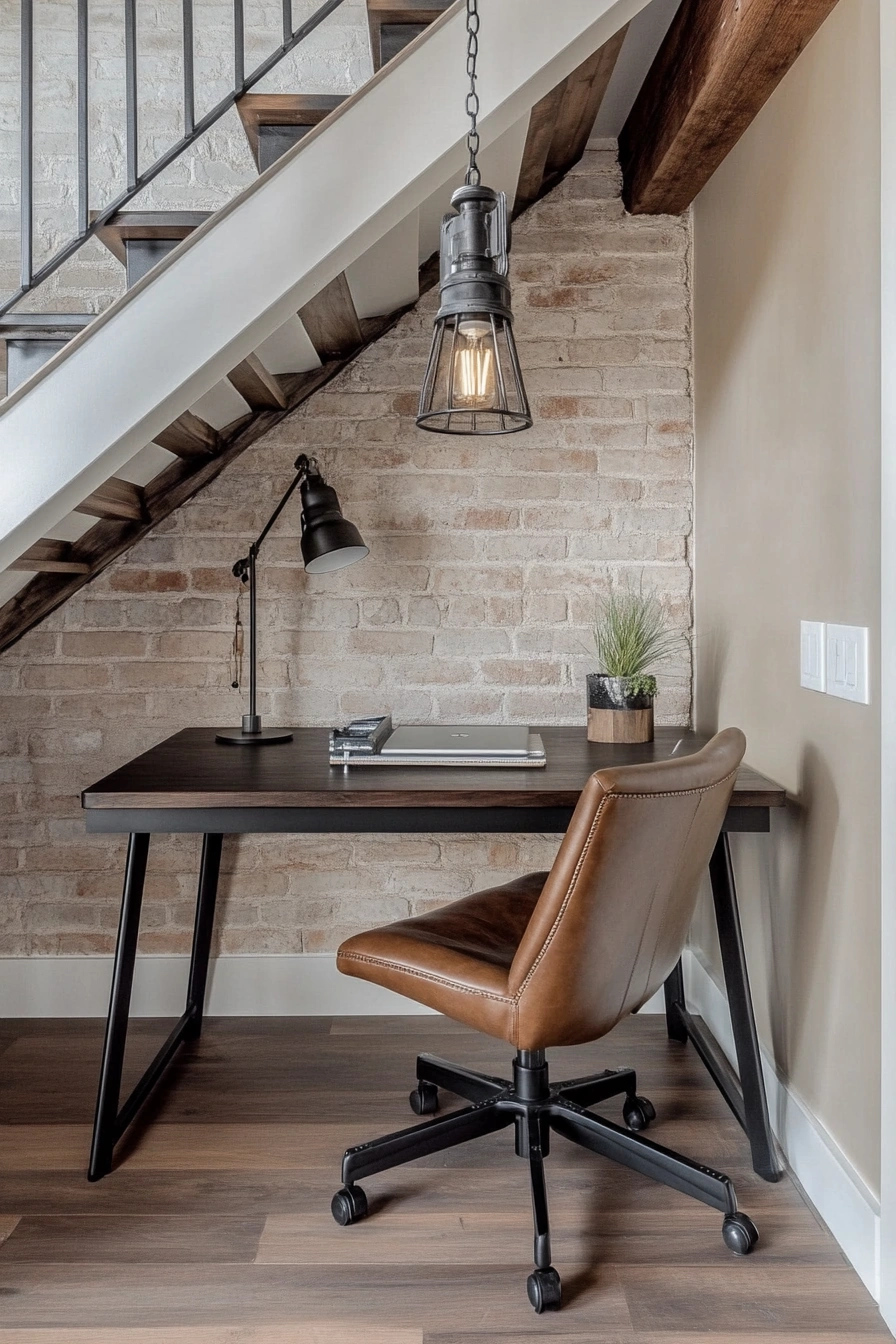
A stylish industrial home office is cleverly tucked under a staircase, utilizing the spandrel area. It features a dark wood desk with black metal legs, an exposed brick wall, and a leather swivel chair. A hanging industrial lamp saves desk space while adding a lot of character. You can recreate this urban-inspired look with rugged textures, vintage elements, and bold contrasts.
19. Under-Stairs Farmhouse Office
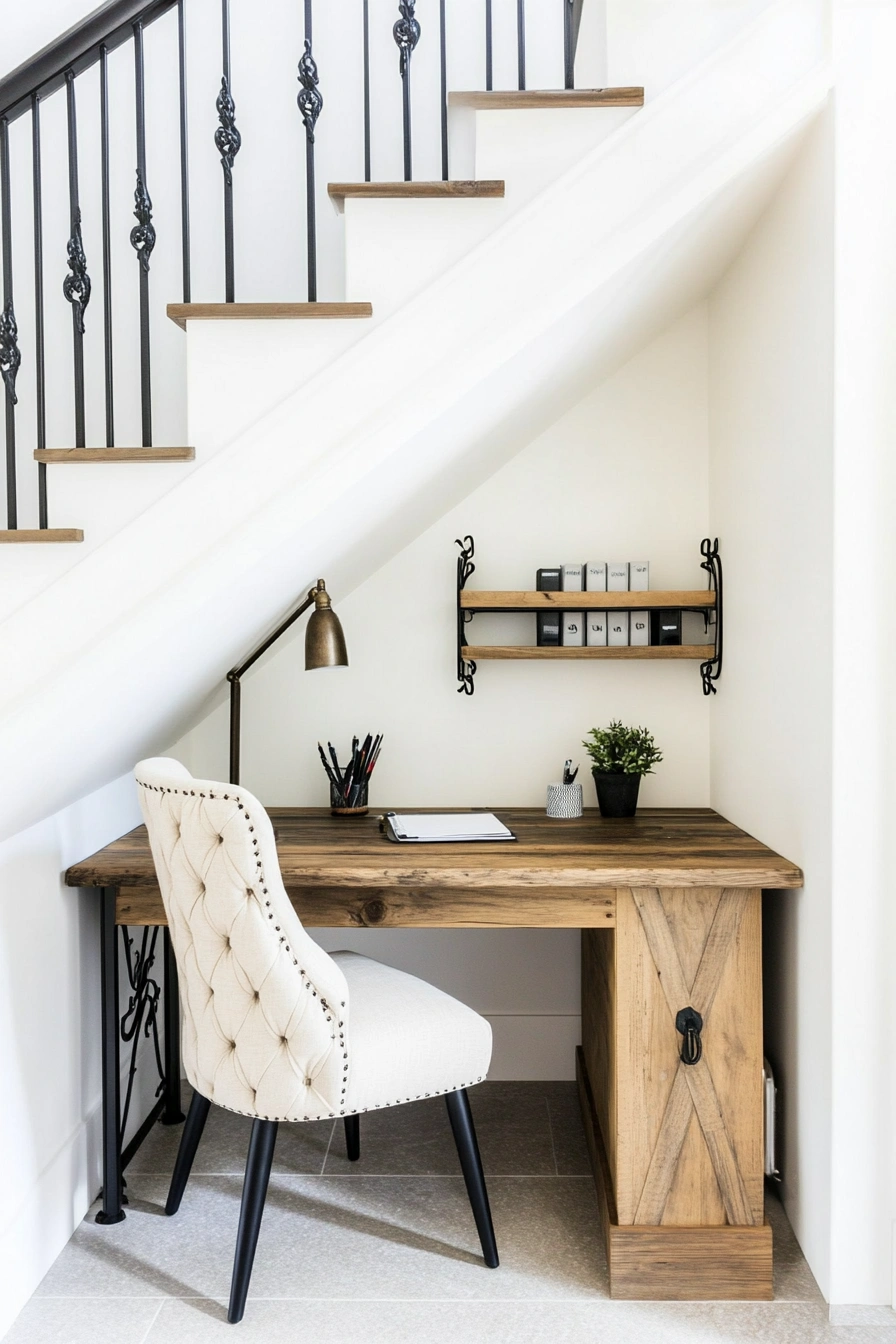
A cozy farmhouse-style office has been created beneath the stairs, featuring a reclaimed wood desk, black iron accents, and a cream-colored upholstered chair. The texture of the reclaimed wood adds instant history. A small wall-mounted shelf maximizes storage without cluttering the space. You can achieve this rustic charm with natural wood, distressed finishes, and vintage-inspired decor.
20. Vintage-Inspired Small Office
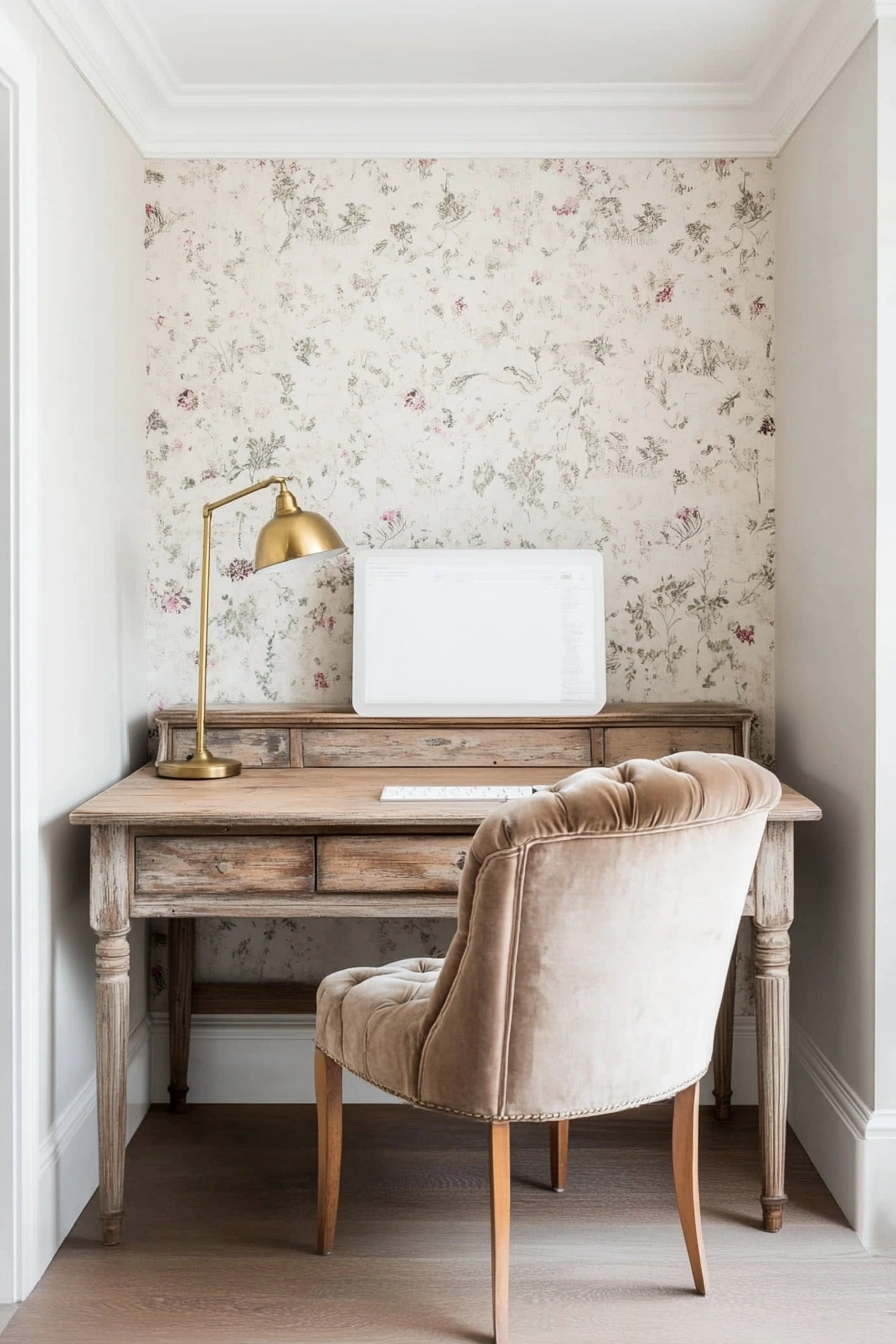
A tiny yet charming vintage office with a distressed wooden desk, a brass desk lamp, and beautiful floral wallpaper behind the workspace. A tufted velvet chair adds an elegant touch, balancing comfort with old-world sophistication. This design proves that small spaces can handle patterns. You can capture this timeless style with antique-inspired pieces, soft fabrics, and classic patterns.
Expert Styling: The “Clean Desk” Protocol
In a dedicated office room, a messy desk is a private failing; in a small, shared living space, a messy desk creates visual chaos for the entire home. To maintain your sanity and your aesthetic, implement these protocols.
- Cable Management: In a compact area, a tangle of wires looks exponentially worse. Utilize adhesive cable clips to run wires along the underside of the desk or the back of furniture legs. Use cable sleeves to bundle cords together, and consider a desk with a built-in grommet or a cable management box to hide the power strip entirely.
- Lighting Strategy: Avoid using precious desk surface area for a bulky lamp base. Instead, opt for Wall Sconces (many are plug-in and require no hardwiring) installed above the monitor. This frees up space for your notebook and coffee while providing dedicated task lighting.
- The “Pack Away” Ritual: Establish a “closing time” ritual. If your office is in the living room, use a stylish rolling cart or a designated woven basket to clear the laptop, mouse, and papers at the end of the day. Physically removing the tech helps you mentally transition from employee to resident.
Conclusion
The constraints of square footage should not be viewed as a limitation, but rather as an invitation to innovate. A small home office forces you to be curated, intentional, and efficient, qualities that often lead to a more beautiful and productive environment than a sprawling, undefined room. Whether you are converting a closet, claiming a corner, or utilizing the space beneath the stairs, remember that productivity is not measured by the size of the desk, but by the clarity of the mind sitting behind it. Look at your home with fresh eyes; your new executive suite might just be hiding in plain sight.
A nascent fascination with spatial composition emerged in my youth. I was the child consumed by the perpetual metamorphosis of my personal quarters, constantly conceiving new chromatic dialogues. This journey has evolved into an exhaustive exploration of diverse design vernaculars, driven by a captivation with how environments articulate identity. These spaces tell our stories. Now, I endeavor to disseminate this cultivated erudition.